The story behind Screeny
I’m an indie developer from Brussels, and Screeny was never meant to be a real app.
I was working on my other app, Brim, and I was part of the build-in-public movement, sharing progress on Threads as I went. At first I’d just post random screenshots of whatever I was working on. But every time, they felt unfinished. Naked screenshots, messy status bar, no frame.
So I went looking for a mockup app. I even asked other creators what they used. And something kept bothering me.
It was the status bar. I know that’s a detail. But it’s the detail I couldn’t stop seeing once I’d noticed it:
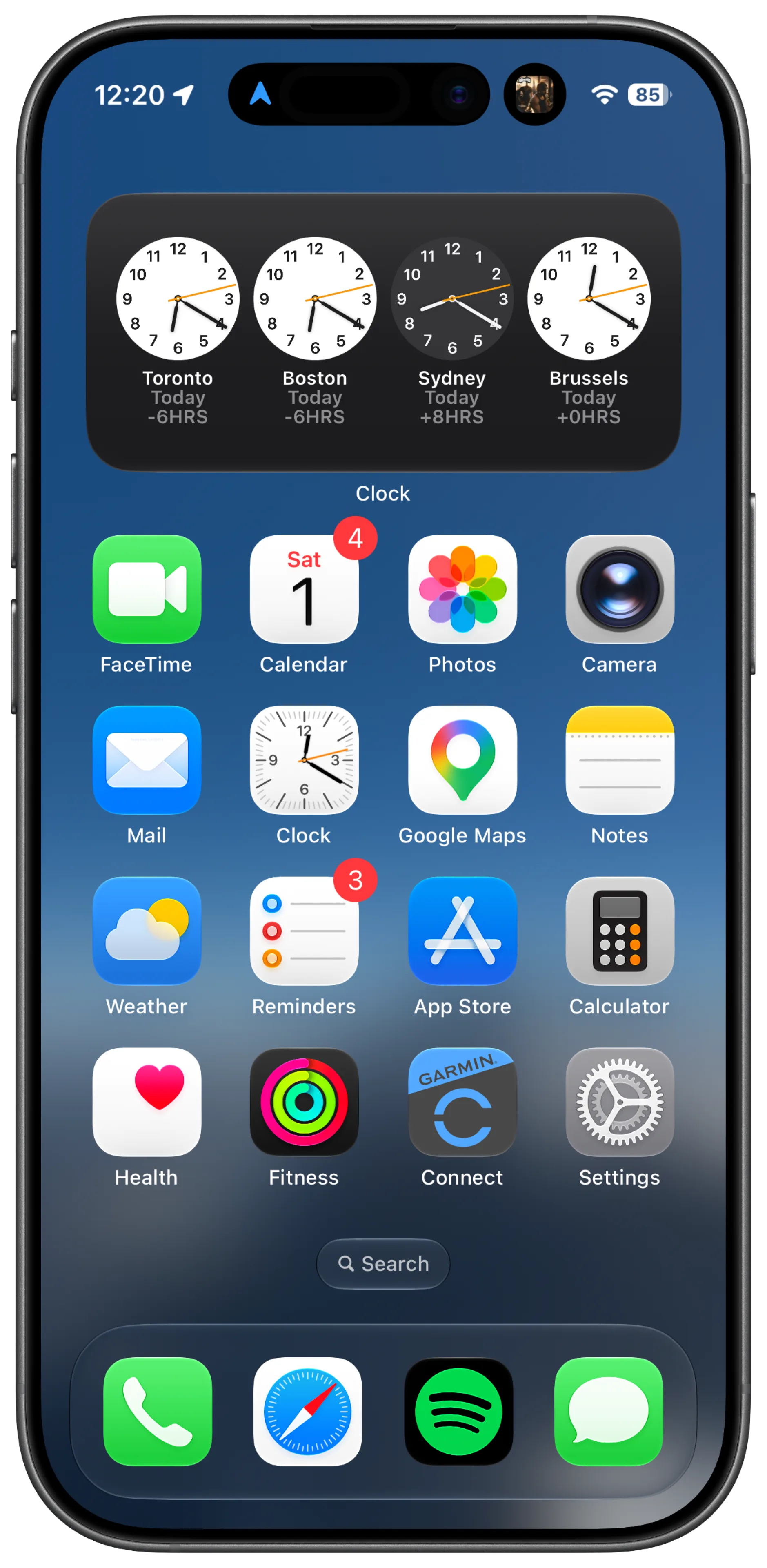
It looks amateur. Not intentional at all. And I posted screenshots like this for months. Apple’s own are always 9:41, and no app offered that.
Beyond that, the UI and UX of every app I tried was honestly horrible. Slow to open, slow to navigate, slow to export. And I wanted video support: out of the five apps I tested, only one supported video at all, and it crashed almost every time I exported anything longer than ten seconds.
Eight days
So I built a tiny utility tool, just for me. Take a screenshot or a screen recording of whatever I was doing on my phone, clean up the status bar, share it. On the go, in seconds.
The MVP took eight days, and I put it on TestFlight figuring that would be the end of it.
Then other developers in the movement noticed it and started using it too. And that’s when the core idea of Screeny crystallized:
Sharing your work shouldn’t take longer than doing the work.
That’s why everything about Screeny is obsessed with speed: not just fast exports, but fast to navigate, fast to find what you’re looking for, fast from “I made a thing” to “it’s posted.”
It grew from there
The feature requests started coming. Custom image backgrounds. Keyframe animation. Batch export. iPad support. One by one, Screeny grew from a utility into a full mockup and demo studio, and became part of how people build things.
Most users are developers sharing their work online. But not only: journalists and tech influencers use Screeny for article headers and to frame whatever they want to show on screen.
Then people started to like it a little too much: they started copying it. And honestly, at its core the app is pretty simple. What’s hard to copy is the research around the experience: the hundreds of small decisions that make it feel smooth.
So I doubled down on exactly that. I spent two full weeks on a five-screen onboarding. I experimented with custom liquid glass to turn your export history into something fun. Every export drops a marble into a glass jar, a little collection of everything you’ve made.
Today
Screeny is used by thousands of developers around the world. It still follows the same rule it was born with: the boring parts automatic, the fun parts yours, and never slower than the work you’re sharing.
We’re just getting started.
Lazare